
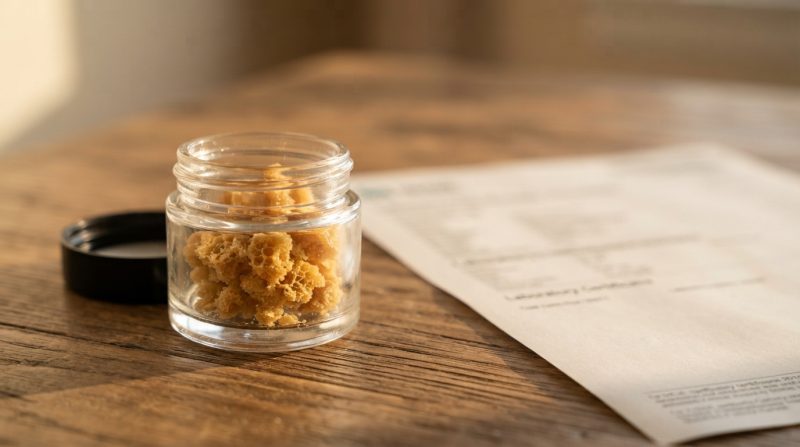
Before you buy THCA crumble, understanding what separates a safe, accurately labeled product from an inferior one comes down to three factors: potency, purity, and third-party testing. The difference between exceptional crumble and mediocre product comes down to extraction methods, source material quality, terpene preservation, and rigorous testing standards.
What THCA Crumble Actually Is
THCA crumble consists primarily of tetrahydrocannabinolic acid in a dry concentrate form. When heat is applied, THCA converts into THC through a process known as decarboxylation. This is what makes potency figures on a label meaningful — the number you see reflects the THCA percentage before activation, not the finished THC content after dabbing.
It is a highly concentrated form of THCA that breaks apart with a soft snap and melts clean into smooth, terpene-rich vapor. Each batch starts with premium hemp extract that is carefully purged and whipped until it reaches its signature honeycomb texture.
Once harvested, the flower goes through advanced extraction methods, typically involving solvents like CO2 or butane, to draw out cannabinoids and aromatic compounds. These processes are calibrated to retain both potency and flavor, helping preserve the delicate terpenes that shape the crumble’s unique scent and taste.
Potency vs. Purity: Two Separate Standards
Many buyers treat potency and purity as interchangeable, but they measure completely different things.
Purity testing is different from potency testing. While potency measures cannabinoid levels like THCA and Delta-9 THC, purity testing measures safety risks. A product labeled “high THCA” is not automatically safe unless contaminants are also tested.
The table below outlines what each standard covers and why both matter:
|
Standard |
What It Measures |
Why It Matters |
|---|---|---|
|
Potency |
THCA %, Delta-9 THC %, minor cannabinoids |
Confirms label accuracy and legal compliance |
|
Purity |
Pesticides, heavy metals, residual solvents, microbials |
Confirms the product is safe to inhale |
|
Terpene Profile |
Dominant terpenes and concentrations |
Reflects flavor quality and strain authenticity |
|
Compliance |
Delta-9 THC below 0.3% by dry weight |
Determines federal hemp status under current law |
Not all THCA wax and crumble are created equal. Purity, potency, and lab testing matter when choosing a quality product. Inferior concentrates may contain residual solvents or impurities, reducing both effectiveness and safety.
How to Read a COA Before You Buy
A Certificate of Analysis is the single most reliable document a buyer can request. Consumers are increasingly looking for full-panel laboratory testing. Brands that provide detailed COAs are considered more transparent and trustworthy.
According to the FDA’s guidance on cannabis-derived products, hemp is defined as cannabis containing no more than 0.3 percent delta-9 THC on a dry weight basis — a threshold that every compliant crumble product must meet at the time of testing.
When reviewing a COA, look for these specific data points:
-
Batch number that matches the product packaging
-
Potency panel showing THCA percentage and total cannabinoid content
-
Purity panel covering pesticides, heavy metals, residual solvents, and microbial contaminants
-
Accreditation information for the testing laboratory
-
Date of analysis — for retail THCA products, reports within the past 6-12 months are generally acceptable.
Transparency is the strongest signal of product quality. Brands that openly publish full-panel, batch-specific reports demonstrate accountability.
What to Look for From a Reputable Source
Every product should start as hemp-derived THCA, sourced with care and tested before it reaches your door. Every batch should be third-party verified, with COAs available for every product.
THCA is a natural cannabinoid found in raw hemp that converts to Delta-9 THC when heated. Hemp-derived THCA products must stay under 0.3% Delta-9 THC to remain federally compliant. Buyers should also check state-level rules before ordering, since some states restrict shipping, so checking local rules first is advisable.
Frequently Asked Questions
What potency percentage is considered good for THCA crumble? Premium crumble should break apart cleanly without being overly dry, deliver vibrant strain-specific flavors, and provide consistent potency backed by third-party lab verification. Potency ranges vary by product and extraction method, so the COA figure is more reliable than any marketing claim.
Does a high THCA percentage mean the product is safe? No. Purity testing must include pesticides, heavy metals, microbial contaminants, and ideally mycotoxins. Potency testing alone is not sufficient.
What makes a lab result trustworthy? Labs registered with the Drug Enforcement Agency (DEA) and compliant with federal regulations, as well as those accredited by the International Organization for Standardization (ISO), carry the most credibility.
Is THCA crumble legal to buy online in the USA? Buying THCA online is legal under the 2018 Farm Bill as long as products contain less than 0.3% Delta-9 THC. Some states restrict shipping, so checking local rules first is important.
Buying THCA crumble confidently means looking past the label and into the lab data. Luminate offers hemp-derived THCA crumble alongside other concentrates, with third-party verified COAs available for every product and free shipping on qualifying orders. Verifying the COA before checkout takes under a minute and is the single most effective step any buyer can take to confirm both safety and potency.